Table of Contents
- Why Guard Quality Matters More Than Quantity
- 1. Alertness & Situational Awareness
- 2. Physical Fitness & Stamina
- 3. Integrity & Trustworthiness
- 4. Professional Communication Skills
- 5. Quick Decision-Making Under Pressure
- 6. Technical & Tactical Training
- 7. First Aid & Emergency Response
- 8. Discipline & Punctuality
- 9. Conflict De-Escalation Ability
- 10. Verified Background & Clean Record
- Quality Comparison Table
- Key Takeaways
- FAQs
- Conclusion
Why the Quality of Your Security Guard Matters More Than the Number of Guards You Deploy
Here's a harsh truth most business owners in Delhi NCR learn the hard way: one highly trained, alert security guard protects your premises better than three poorly vetted ones ever could.
Whether you're securing a corporate office in Gurgaon's Cyber City, a residential society in Noida, a warehouse in Okhla Industrial Area, or a retail showroom in Connaught Place, the guards standing at your gates are your first — and often only — line of defence against theft, trespassing, vandalism, and security threats.
Yet, many facility managers and business owners make the mistake of hiring guards purely based on the lowest bid from manpower agencies, without ever evaluating whether those guards have the skills, training, and temperament to actually protect their people and assets.
At Active Spartans Security Pvt. Ltd., a PSARA-licensed, government-registered security agency serving all of Delhi NCR, we've deployed 500+ guards across 150+ client sites. Through years of operational experience, we've identified the 10 non-negotiable qualities that separate a truly professional security guard from someone who is simply wearing a uniform.
Use this guide as your hiring checklist — whether you're evaluating an individual guard or choosing between security agencies.
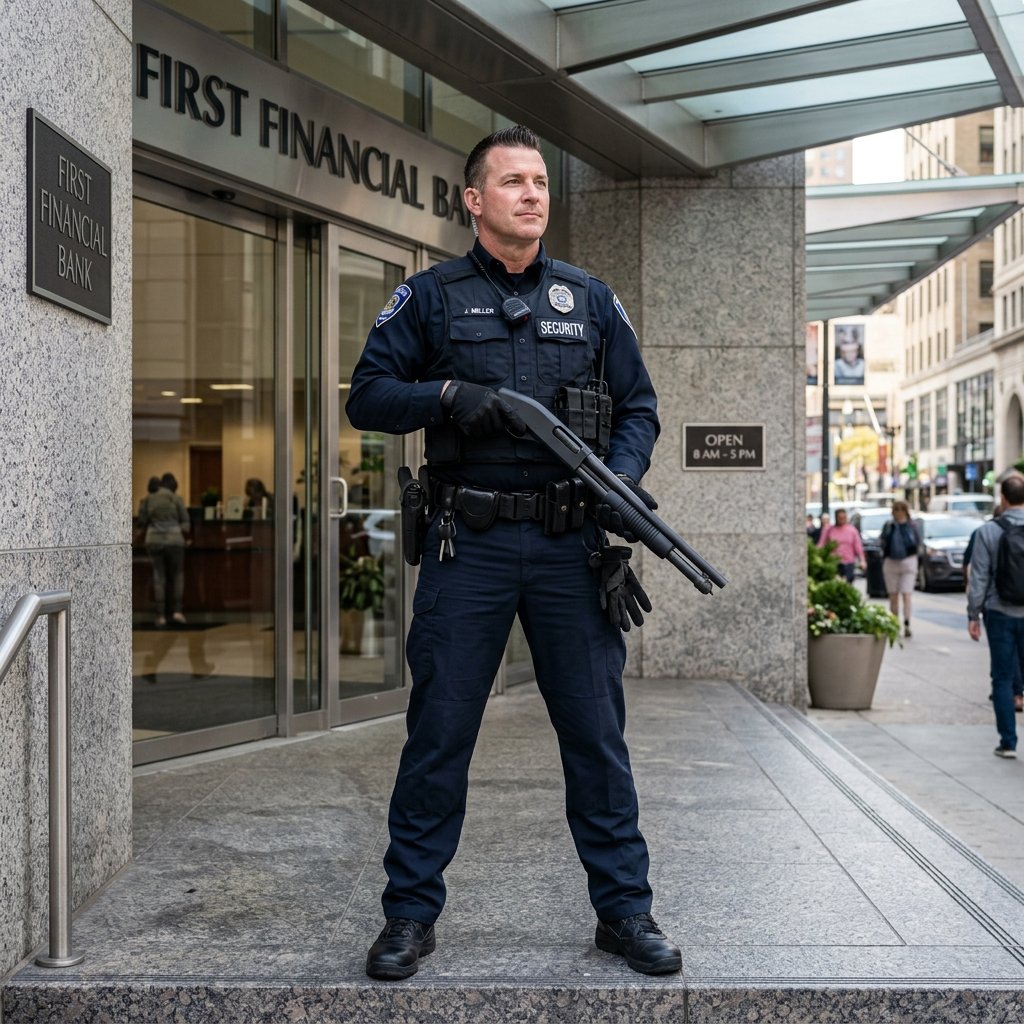 Professional security guard undergoing site inspection and brief before deployment in Delhi NCR
1. Alertness & Situational Awareness
This is the single most important quality a security guard can possess. A security guard's primary job is not to stand at a gate — it's to observe, detect, and respond to threats before they materialise into incidents.
What Alertness Looks Like in Practice
- Scanning the environment constantly — noticing unfamiliar faces, vehicles, or behaviour patterns that break from the norm
- Monitoring CCTV feeds actively — not passively staring at screens but flagging anomalies immediately
- Tracking entry/exit patterns — knowing how many people entered versus how many left, especially during shift changes
- Identifying security gaps — proactively reporting broken locks, malfunctioning cameras, or poorly lit areas to management
How Active Spartans Ensures This
All Active Spartans guards undergo quarterly situational awareness drills that simulate real threats — from tailgating attempts at office lobbies to suspicious package scenarios. Guards who fail these drills receive immediate retraining. This is why our incident detection rate is significantly higher than industry average.
Red Flags to Watch For
- A guard who is frequently on their mobile phone during duty hours
- A guard who does not make eye contact with visitors entering the premises
- A guard who cannot recall basic details about the last few visitors when asked during spot checks
2. Physical Fitness & Stamina
Security work is physically demanding. Guards are required to stand for 8–12 hour shifts, patrol large premises on foot, and — in emergency situations — respond physically to threats such as intruders, fire evacuations, or crowd surges.
Minimum Physical Standards You Should Expect
- Endurance: Ability to stand and walk for extended periods without fatigue affecting performance
- Vision: Good eyesight (with or without corrective lenses) — especially important for CCTV monitoring and night patrolling
- Hearing: Ability to hear alarms, intercoms, and distress calls clearly
- Mobility: Quick movement in emergency situations — able to run short distances, climb stairs, and manage physical interventions if trained
Why This Matters in Delhi NCR Specifically
Delhi NCR experiences extreme temperatures — summers exceeding 45°C and winters dropping below 5°C. Guards must be physically resilient enough to perform effectively across these conditions. At Active Spartans, we ensure guards receive weather-appropriate gear and hydration breaks during peak summer deployments, while still maintaining active vigilance.
3. Integrity & Trustworthiness
A security guard has access to your premises, your assets, and sometimes sensitive information. Without integrity, all other qualities become meaningless — a physically fit, alert guard who is dishonest is a far greater threat than an intruder.
How to Verify Integrity Before Hiring
- Police verification: Mandatory under PSARA. Ask the agency for police verification certificates for every guard deployed
- Background checks: Verification of past employment, criminal record check, and address verification
- Reference checks: Speak with the guard's previous employers or the agency's existing clients
- Agency credibility: A PSARA-licensed agency is legally bound to conduct these checks. Unregistered manpower suppliers often skip them entirely
Active Spartans' Verification Process
Every guard deployed by Active Spartans undergoes a 7-point verification process: Aadhaar and PAN verification, police clearance certificate, previous employment verification, local address verification, medical fitness test, drug screening, and a detailed personal interview by our operations manager. We never deploy a guard whose verification is incomplete.
4. Professional Communication Skills
Security guards interact with dozens of people daily — employees, visitors, delivery personnel, maintenance teams, and sometimes law enforcement or emergency services. Poor communication leads to confusion, delayed responses, and a negative impression of your organisation.
Communication Skills That Matter
- Verbal clarity: Ability to speak clearly in Hindi and basic English — especially for corporate and residential deployments in Delhi NCR
- Polite firmness: Enforcing access rules without being rude or aggressive — turning away unauthorised visitors respectfully
- Incident reporting: Documenting incidents in writing — clearly noting what happened, when, and what actions were taken
- Radio/intercom communication: Using communication devices professionally with clear, concise messaging
- Emergency communication: Ability to call police, fire brigade, or ambulance services and convey location and situation details accurately
A guard who cannot communicate effectively with your visitors creates a poor first impression. A guard who cannot communicate during an emergency creates a dangerous situation.
5. Quick Decision-Making Under Pressure
Security threats don't come with a warning. A professional guard must be able to assess situations instantly and make the right call — without waiting for instructions from a supervisor who may not be on-site.
Real-World Scenarios That Test Decision-Making
- Unauthorised entry attempt: Should the guard confront, block, or call for backup? The answer depends on the threat level, number of intruders, and available support
- Fire alarm activation: Is it a drill or real? Which evacuation route should be used? Who needs to be notified first?
- Medical emergency: A visitor collapses in the lobby — does the guard start first aid, call an ambulance, or both simultaneously?
- VIP arrival with no prior notification: How to handle security protocol without causing embarrassment?
- Suspicious package found: Evacuate the area or call the bomb disposal squad? What's the correct protocol?
6. Technical & Tactical Training
Modern security goes beyond standing at a gate. Today's security guards must be proficient with technology, surveillance systems, and tactical response procedures.
Essential Technical Skills
- CCTV operation: Understanding camera angles, blind spots, playback functions, and how to flag recorded footage for review
- Access control systems: Operating biometric scanners, card readers, boom barriers, and visitor management software
- Fire safety systems: Using fire extinguishers (ABC, CO2, foam types), activating fire alarms, and operating fire hydrant systems
- Basic IT awareness: Using tablets or smartphones for digital reporting, e-logbooks, and real-time incident updates
Tactical Skills for Specialised Roles
- Armed guards / PSOs: Weapons handling, safe storage, legal use-of-force guidelines, and marksmanship
- Bouncers: Crowd control techniques, physical restraint methods, and de-escalation tactics
- Event security: Entry/exit flow management, bag checking procedures, and VIP protocol
Active Spartans Training Programme
Every guard at Active Spartans completes a mandatory 2-week induction training programme covering physical fitness, technical skills, communication, emergency response, and site-specific protocols. Guards also attend monthly refresher sessions and are tested quarterly. Guards who don't meet our standards are retrained or reassigned — we never compromise on training quality.
7. First Aid & Emergency Response
In many emergency situations, a security guard is the first responder on-site — often arriving at the scene minutes before paramedics, firefighters, or police. Their ability to provide basic first aid and manage the emergency can literally save lives.
First Aid Skills Every Guard Should Have
- CPR (Cardiopulmonary Resuscitation): Restarting breathing and circulation in cardiac arrest cases
- Wound management: Stopping bleeding, cleaning wounds, and applying bandages
- Fracture stabilisation: Immobilising broken bones to prevent further injury before medical help arrives
- Burns treatment: Cooling burns, covering with sterile dressing, and managing shock
- Choking response: Performing the Heimlich manoeuvre on adults and children
Emergency Response Protocols
- Fire evacuation: Guiding occupants to assembly points using predetermined routes
- Earthquake response: "Drop, Cover, Hold" protocol and post-quake building assessment
- Bomb threat: Evacuation procedures, perimeter security, and coordination with law enforcement
- Medical emergency: Calling ambulance services (102/108), providing location details, and managing the scene until help arrives
8. Discipline & Punctuality
A security guard who arrives late for their shift creates a gap in your security coverage. A guard who breaks uniform protocol projects unprofessionalism. A guard who doesn't follow the patrol schedule leaves areas unmonitored.
What Discipline Looks Like on the Ground
- On-time shift reporting: Arriving 15 minutes before shift handover to receive briefing from the outgoing guard
- Uniform compliance: Clean, pressed uniform with visible ID badge at all times
- Patrol adherence: Following the designated patrol route and schedule without skipping checkpoints
- No personal distractions: No mobile phone use, no sleeping, no smoking on duty, no unauthorised breaks
- Logbook maintenance: Accurate, legible, and timely recording of every visitor, vehicle, and incident
9. Conflict De-Escalation Ability
Not every threat requires a physical response. In fact, the best security guards are those who can resolve conflicts without any physical confrontation — through calm communication, firm authority, and smart positioning.
Common Conflict Scenarios in Delhi NCR
- Angry visitors denied entry: A delivery person insists on entering without proper ID — the guard must enforce the rule without creating a scene
- Parking disputes: In residential societies and office complexes, parking arguments are among the most frequent conflicts guards handle
- Intoxicated individuals: At events, pubs, and residential premises — handling someone under the influence requires patience and tactical positioning
- Tenant/resident complaints: In residential deployments, guards often become mediators in neighbour disputes
De-Escalation Techniques That Work
- Active listening: Let the aggrieved person speak without interrupting — this alone reduces aggression by 50%
- Calm, low-volume speech: Speak slowly, softly, and clearly — loud responses escalate conflicts
- Empathy statements: "I understand your frustration, sir. Let me see how I can help" — acknowledging feelings without agreeing to unreasonable demands
- Offering alternatives: "I can't let you in without ID, but I can call the person you're visiting to come down"
- Knowing when to call for backup: Recognising when a situation is beyond verbal resolution and calling supervisors or police before it escalates
10. Verified Background & Clean Record
This is the foundational quality that everything else rests upon. A security guard is only as trustworthy as their background verification allows you to confirm.
Mandatory Verifications Under PSARA
- Police verification certificate: Issued by the local police station after a thorough background check
- Criminal record check: Verification that the guard has no pending criminal cases or convictions
- Identity verification: Aadhaar, PAN card, and voter ID cross-verification
- Address verification: Physical verification of the guard's current and permanent addresses
- Previous employment verification: Contacting former employers to verify tenure, role, and reason for leaving
Why Agency Choice Matters
Unregistered manpower suppliers and non-PSARA agencies often skip background verification to cut costs and deploy guards faster. This puts your premises, employees, and family at direct risk. Always insist on hiring through a PSARA-licensed agency that provides police verification certificates for every guard. Active Spartans Security is fully PSARA-licensed and provides complete verification documentation to every client.
Quality Comparison: Professional Guard vs. Untrained Guard
| Quality | Professional Guard (Active Spartans) | Untrained / Unverified Guard |
|---|---|---|
| Alertness | Constantly scanning; reports anomalies proactively | Distracted; uses phone on duty |
| Physical Fitness | Fit for 12-hour shifts; weather-resilient | Fatigues quickly; no fitness assessment |
| Integrity | Police-verified; 7-point background check | No verification; unknown history |
| Communication | Clear Hindi & basic English; professional demeanour | Rude or unresponsive to visitors |
| Decision-Making | Follows SOPs; handles emergencies independently | Panics; waits for instructions |
| Technical Skills | Operates CCTV, access control, fire systems | No technical training |
| First Aid | CPR, wound care, evacuation trained | No medical training |
| Discipline | On-time, uniformed, follows patrol schedule | Late, no uniform compliance |
| Conflict Resolution | De-escalates calmly; avoids physical confrontation | Argues back; escalates situations |
| Background | Clean criminal record; PSARA compliant | Unverified; potential risk |
Key Takeaways
- Alertness is #1: A guard's ability to observe, detect, and respond is more important than physical size or intimidation
- Verify everything: Never accept an agency's word alone — ask for police verification certificates, PSARA license, and training records
- Communication is critical: Guards represent your organisation at the gate — their behaviour shapes your visitors' first impression
- Training separates professionals from amateurs: Ask about induction training duration, refresher schedules, and testing protocols
- Agency quality = Guard quality: The best individual guard cannot perform well without proper agency infrastructure — supervision, SOPs, audits, and support
- Don't hire based on lowest cost alone: The cheapest security is often the most expensive when an incident occurs due to untrained, unverified personnel
- Demand accountability: Monthly performance reports, surprise audits, and dedicated account managers are signs of a professional agency
Frequently Asked Questions About Security Guard Qualities
What is the most important quality in a security guard?
Alertness and situational awareness are the most important qualities. A guard who is constantly aware of their surroundings can detect threats early and prevent incidents before they escalate. However, this must be paired with integrity, physical fitness, and proper training to be truly effective.
How can I evaluate a security guard's skills before hiring?
Request training certificates, check police verification documents, ask about prior experience and deployment history, conduct a brief situational awareness test during the interview, and ask the security agency for performance reports from previous clients. Reputable agencies like Active Spartans provide detailed guard profiles with verified credentials.
Should security guards have first aid training?
Yes, first aid training is essential. In emergencies like heart attacks, injuries, or fire evacuations, a trained guard can provide critical first response before medical help arrives. All guards deployed by Active Spartans Security are trained in basic first aid and emergency response protocols.
What physical fitness standards should a security guard meet?
A professional guard should be able to stand and patrol for 8–12 hour shifts, have the stamina for rapid emergency response, maintain good vision, and pass a basic fitness assessment. Bouncers and armed guards require higher physical standards including self-defence training and endurance tests.
Do security guards in Delhi NCR need specific certifications?
Yes, under PSARA (Private Security Agencies Regulation Act, 2005), all security guards in Delhi NCR must be employed through a PSARA-licensed agency, undergo mandatory police verification, complete security training, and carry a valid identity card issued by the agency. Armed guards additionally need an arms license and weapons handling certification.
How important is communication skill for a security guard?
Communication skills are critically important. Guards need to communicate clearly with visitors, employees, delivery personnel, and emergency services. Poor communication leads to misunderstandings, delayed emergency responses, and a negative impression. Guards at corporate and residential sites especially need polished communication skills.
Conclusion: Investing in Qualified Protection
Hiring a security guard is one of the most critical operational decisions you will make for your business, facility, or residential community in Delhi NCR. As outlined in this guide, a guard's value goes far beyond simply wearing a uniform — it relies on alertness, verified integrity, physical readiness, clear communication, and disciplined execution.
By evaluating these 10 essential qualities and choosing a PSARA-licensed, government-registered security partner, you protect your assets, minimise liability, and ensure complete peace of mind.
At Active Spartans Security Pvt. Ltd., we strictly enforce these 10 standards across all 500+ guards deployed across Delhi, Gurgaon, Noida, Faridabad, and Ghaziabad. Contact our team today to schedule a free security assessment for your site.